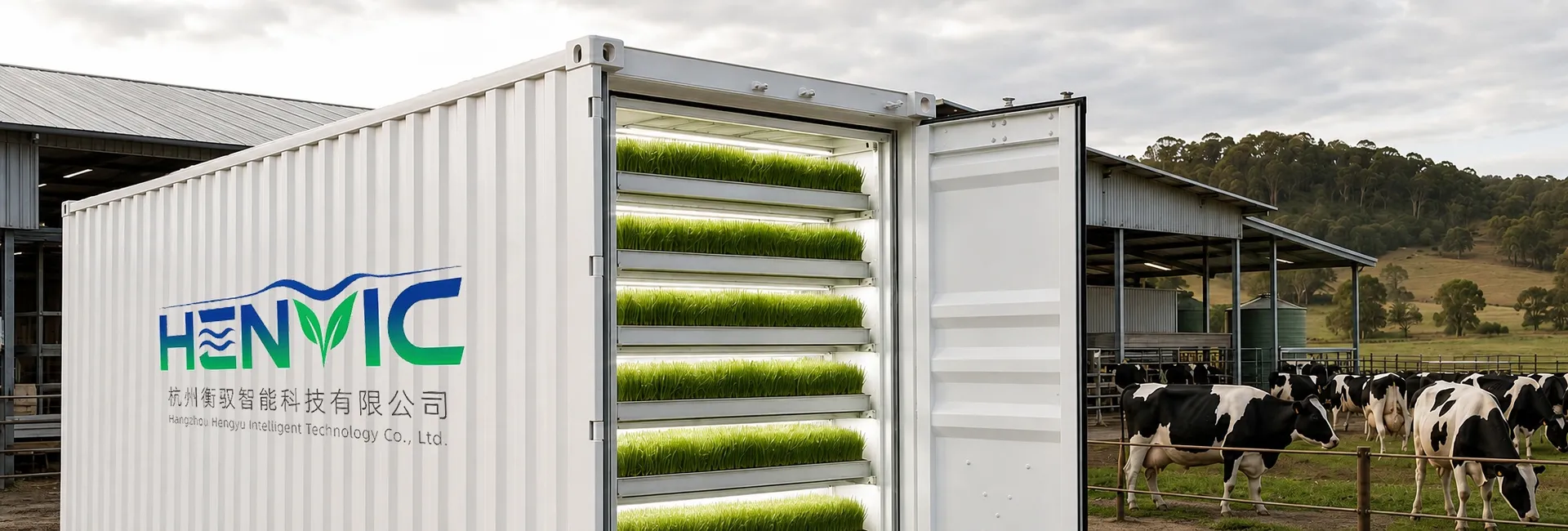
Put a container farm and a rooftop farm side by side and the most obvious difference is physical: one is a forty-foot steel box, the other is an open or semi-enclosed growing area spread across the top of a building. Size and footprint dominate the comparison at first glance. But size is the least interesting variable. What actually separates the two is a set of structural, climatic, regulatory, and economic conditions that follow from a single underlying distinction — the container is a self-contained, movable closed system, while the rooftop farm is a site-bound, weather-exposed open system. Almost every other difference flows from that.
The defining distinction: closed system vs. open system
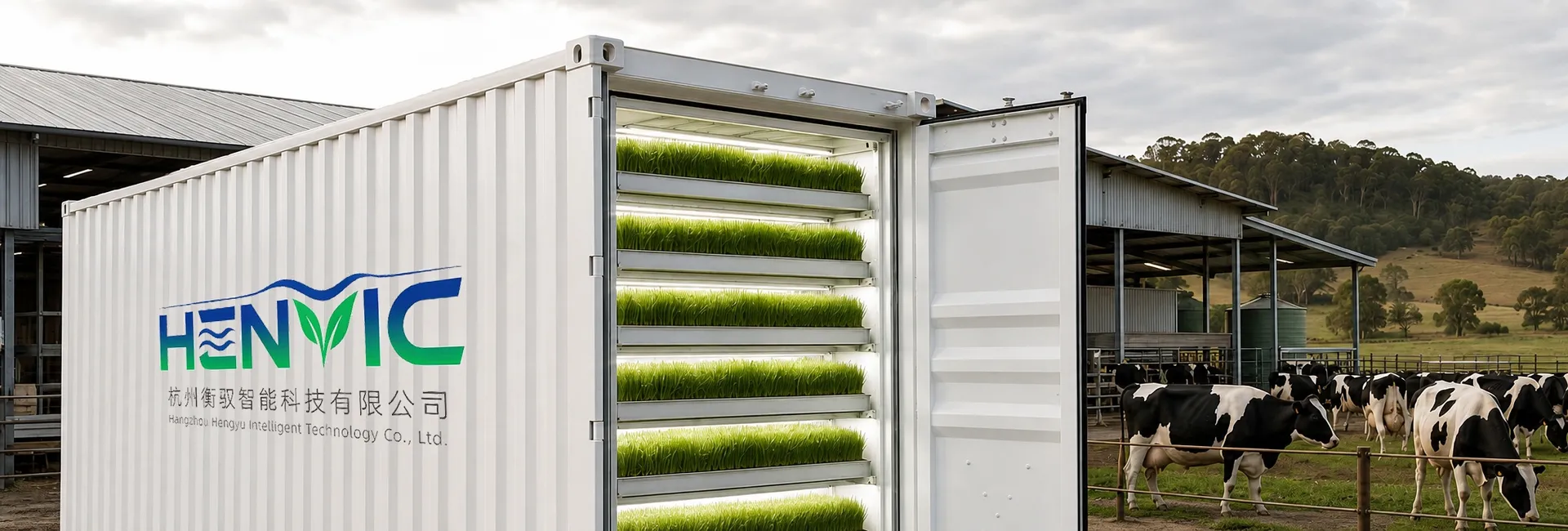
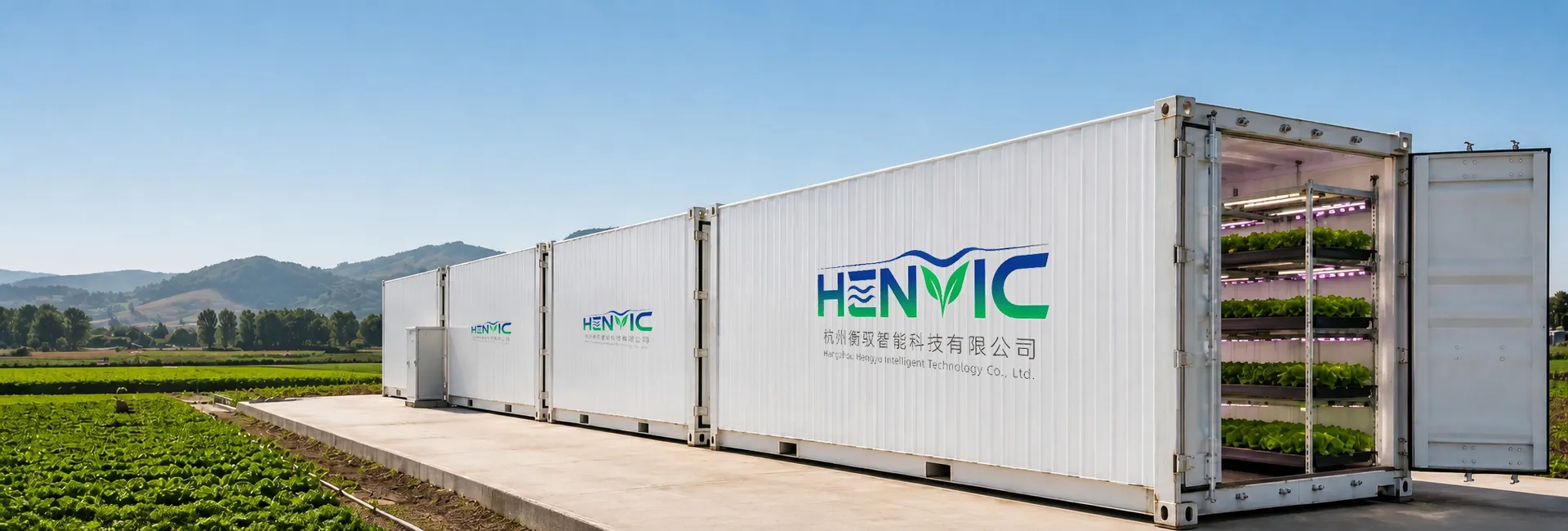
A container farm manufactures its own environment. Light, temperature, humidity, CO₂, irrigation, and airflow are all internally generated and controlled. The outside world is irrelevant — a desert afternoon and a polar night both resolve to the same internal setpoint. The container is therefore portable: it can be shipped, stacked, and relocated, and its performance is reproducible from site to site.
A rooftop farm inherits the environment of its location. It receives natural sunlight, experiences ambient temperature and humidity, and is exposed to wind, rain, hail, and airborne pests. Its performance varies seasonally and geographically. It is not movable; once installed, it is inseparable from the building beneath it.
This single difference cascades into everything that follows.
Structural and load-bearing constraints
Roofs are not designed to carry farms. This is the first hard constraint the two forms encounter, and they encounter it differently.
A container farm is heavy but concentrated. A loaded forty-foot container with irrigation, growing racks, and water may weigh several tonnes distributed over roughly 30 square meters of floor area. The structural demand on the host surface is significant but localized — which is why container farms can sit on parking lots, compacted gravel, or reinforced slabs without major building work.
A rooftop farm distributes its load across a much larger area, but that load includes growing medium, water-saturated soil or substrate, drainage layers, and the standing water in irrigation lines. Soil-based rooftop farms can impose loads of hundreds of kilograms per square meter when saturated, and this often exceeds what an ordinary building roof was designed to bear. The result is that rooftop farms frequently require structural reinforcement, load-spreading platforms, and careful positioning of heavy elements over load-bearing walls and columns. Rooftop farming is therefore a retrofit problem as much as an agricultural one.
The practical consequence: containers are structurally self-supporting and demand only a flat, load-rated surface; rooftop farms are structurally interdependent with the building and may require engineering intervention before a single plant is grown.
Climate control and energy profile
Because a container farm is sealed, all climate regulation is active and paid for in electricity. Lighting is the dominant load — every photon is artificial — followed by cooling and dehumidification. The sealed envelope also has a high surface-area-to-volume ratio, which means heat gain and loss happen faster than in a larger building, increasing the load on HVAC systems.
A rooftop farm in a favorable climate does the opposite. It leverages free sunlight and free ambient airflow, and its energy costs are a fraction of a container farm's. Its climate control is largely passive or supplementary — shade cloths, ventilation, misting, and frost protection — rather than comprehensive.
But the rooftop's advantage is conditional. In hot climates, summer heat and high evapotranspiration can stress crops and drive irrigation demand sharply upward. In cold climates, the season collapses to a few months unless the rooftop is covered or heated. And in all climates, the rooftop farm is exposed to wind, which increases transpiration and can physically damage tall crops.
The trade is stark: the container buys predictability at the price of energy; the rooftop buys free light and air at the price of exposure.
Light, spectrum, and crop range
Light is where the two systems diverge most sharply in what they can grow.
A container farm grows under LED arrays with tunable spectra. The grower can control photoperiod independent of season, adjust red-to-blue ratios to influence morphology and flavor, and add far-red channels to shape canopy architecture. The absence of natural light also eliminates the seasonal variability that makes year-round consistency so hard outdoors. This control is what allows container farms to produce uniform leafy greens and herbs on a fixed schedule, twelve months a year, regardless of latitude.
A rooftop farm is limited by the sun. Photoperiod follows the season, light intensity varies with cloud cover and latitude, and the spectrum is whatever the atmosphere delivers. This dramatically narrows the crop range: rooftop farms excel with cool-season leafy greens, herbs, and some root vegetables in temperate climates, but struggle with light-hungry fruiting crops and cannot produce out of season without supplementary lighting — which reintroduces the container farm's energy problem without its enclosure benefits.
There is also a height and volume difference. A container farm's vertical racks allow multilayer stacking, effectively multiplying planted area within a small footprint. A rooftop farm is typically single-layer, since stacking would shade the lower tiers, and its productive area is limited to the roof's horizontal extent.
Logistics, market proximity, and land economics
Both forms benefit from proximity to consumers, but for different reasons and with different cost structures.
A rooftop farm's primary economic argument is land cost avoidance. Rooftops are otherwise unused surfaces, and using them for agriculture lets a grower capture prime urban real estate without paying for it. The farm is literally above its market — restaurants, grocery buyers, and institutional customers can be meters or blocks away, and produce can be harvested the same day it is sold. Distance and cold-chain cost collapse to near zero.
A container farm's primary argument is deployability. It also avoids land cost, but its decisive advantage is that it can go anywhere with power and water — not just urban rooftops. It can serve a remote island, a mining camp, a polar station, or a disaster zone where no building exists to host a rooftop farm. Its value is measured in supply independence, not in urban proximity.
This produces a telling asymmetry: rooftop farms are, by definition, urban and building-dependent, while container farms are location-agnostic and building-independent. A rooftop farm cannot exist without a suitable roof. A container farm does not need a building at all.
Regulatory and permitting burden
The regulatory paths diverge substantially, and often in counterintuitive ways.
Rooftop farms must navigate building codes, structural permits, fire egress, waterproofing and drainage requirements, insurance adjustments, and landlord or co-op agreements. In some jurisdictions, zoning codes do not explicitly address rooftop agriculture, forcing case-by-case negotiation. Physical access — how workers and materials reach the roof — is itself a regulatory and logistical constraint, often requiring elevator scheduling, weight limits, and safety measures.
Container farms sidestep many of these issues because they are treated as equipment or temporary structures rather than construction. In many jurisdictions, a container placed on private ground requires no building permit, no structural modification, and no permanent alteration to the site. It can be connected to power and water and begin operating within days. That regulatory lightness is a major, underappreciated part of the container's value proposition.
The reverse can also be true, however: in some municipalities, a shipping container is classified as a permanent structure and triggers the same permitting requirements as a building, erasing its flexibility advantage. The regulatory treatment is jurisdiction-specific and, for practical purposes, must be verified before deployment rather than assumed.
Water, substrate, and consumables
Container farms run on recirculating hydroponics or aeroponics, which can reduce water use by an order of magnitude relative to field agriculture because transpiration is captured and returned. Substrate is inert and controlled; no soil pathogens, no weeds, no variability. Water quality must be managed carefully, particularly for aeroponics, which demands fine filtration to protect atomizing nozzles.
Rooftop farms typically use soil-based or substrate-based beds with drip or flood irrigation. Water use is higher, drainage must be managed to avoid roof damage, and the growing medium must be replenished over time as nutrients deplete and structure degrades. Runoff water must be handled so it does not damage the waterproof membrane or overload stormwater systems — a genuine engineering concern that container farms simply do not have.
The container farm's closed loop is an efficiency advantage; the rooftop farm's open system is cheaper to establish but heavier in resource use.
Operational reality and failure modes
Day-to-day operation differs as much as the engineering.
Operating a container farm is closer to running a factory than a farm. It requires technical competence in sensors, controllers, pumps, and HVAC; a power outage or chiller failure can destroy a crop within hours; and the environment must be monitored continuously. The upside is that conditions are stable, work is conducted indoors in controlled temperatures, and one operator can supervise multiple units remotely.
Operating a rooftop farm is closer to conventional horticulture transposed upward. It is labor-intensive, seasonally variable, and physically demanding — particularly in heat, wind, and cold, and particularly when moving soil, water, and harvests up and down a building. It is vulnerable to pests introduced by wind and birds, requires weather-responsive management, and offers no protection against storms. But it is simpler, requires less technical infrastructure, and has lower capital intensity per unit of planted area.
Where each belongs
The differences point to distinct optimal use cases.
Container farms make sense where the value lies in independence and predictability: remote locations, extreme climates, disaster response, military or research installations, decentralized urban sites without suitable roofs, and anywhere a reproducible, year-round, soil-free production unit needs to be placed quickly and moved later if needed. Their economics work when the alternative is an expensive or unreliable supply chain.
Rooftop farms make sense where the value lies in cheap land, free sunlight, and immediate proximity to dense urban markets: cities with underused commercial and industrial roofs, temperate climates with adequate growing seasons, and buildings structurally capable of carrying the load. Their economics work when the alternative is land acquisition at urban prices.
Neither is a general replacement for the other, and neither replaces conventional agriculture. Both occupy the high-value, perishable, fast-turnover segment — leafy greens, herbs, microgreens, and select specialty crops — where freshness and supply proximity command a premium that can justify the cost.
The deeper contrast
The container and the rooftop are not simply two sizes of the same idea. They represent two different strategic bets on how to decouple food production from geography.
The rooftop farm bets that cities already possess the surface area needed for food production, and that sunlight and proximity can be turned into an economic advantage with relatively modest engineering. Its constraint is the building: everything depends on whether the roof can carry the load and whether the climate cooperates.
The container farm bets that the growing environment can be manufactured outright, and that mobility and predictability are worth paying for in electricity and capital. Its constraint is energy: everything depends on whether power is cheap, reliable, and low-carbon enough to make sealed, artificially lit production viable.
One leverages what a place already offers. The other supplies what a place lacks. That is the distinction that matters far more than volume — and it is the reason the two forms will continue to coexist rather than converge.