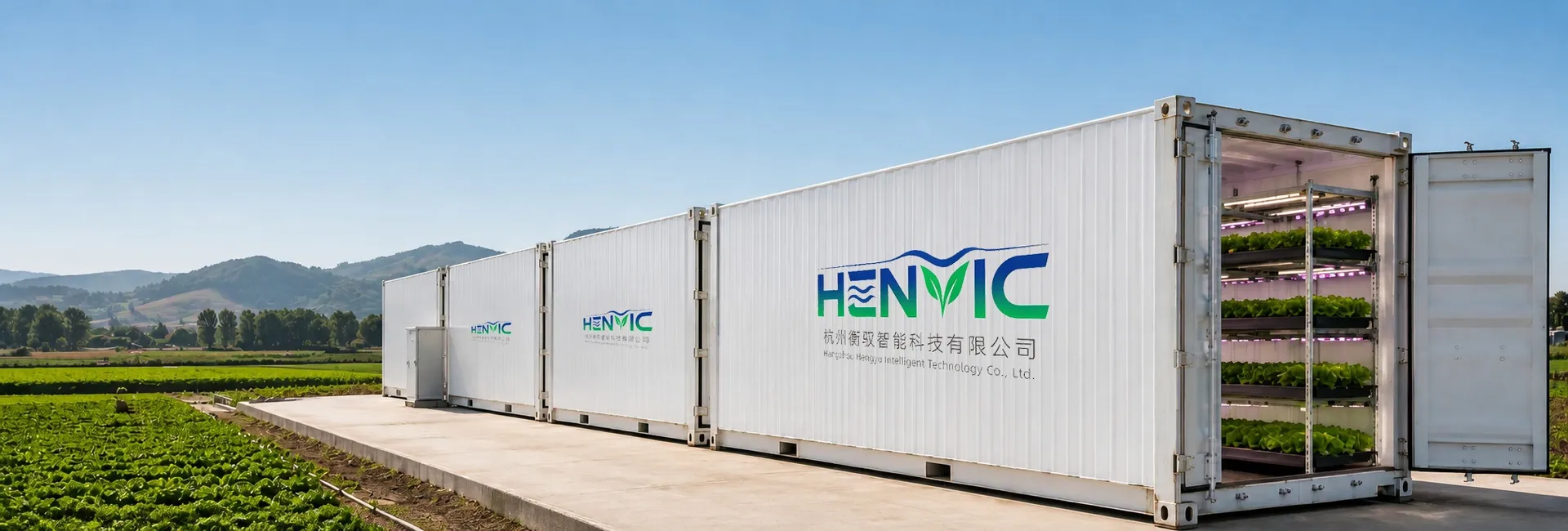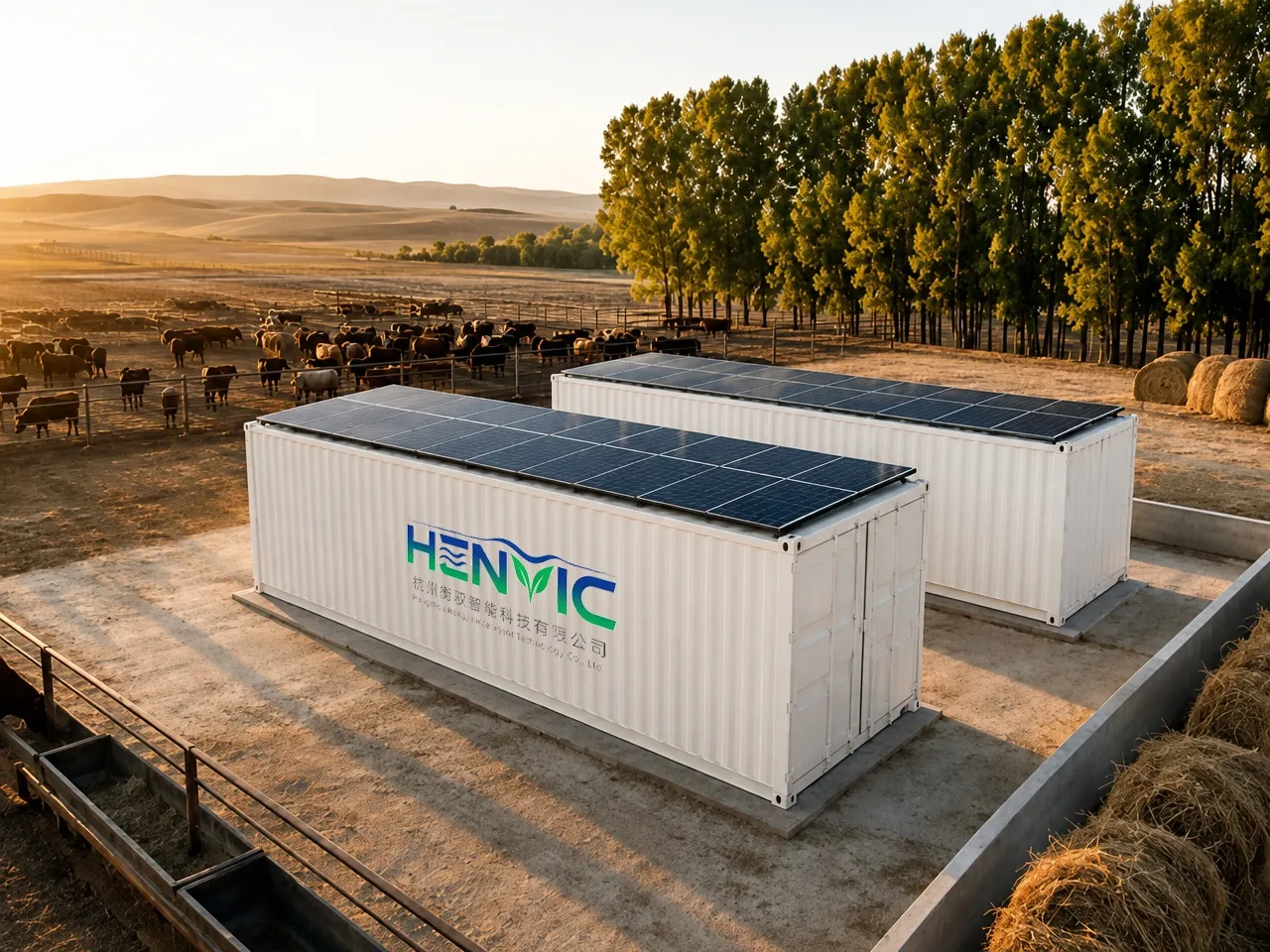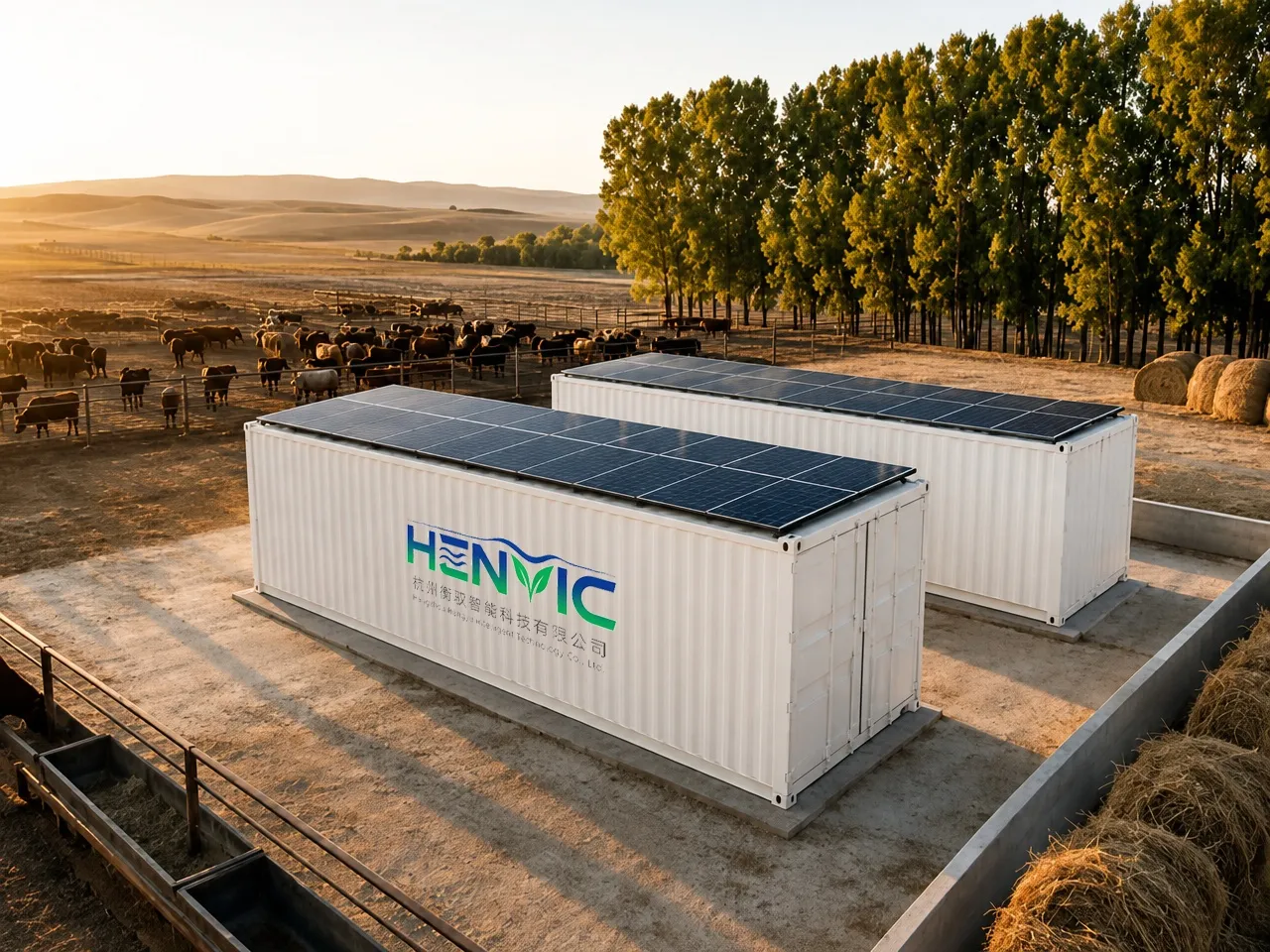
A standard 40-foot high-cube shipping container measures roughly 12.03 metres long, 2.35 metres wide and 2.39 metres high inside, enclosing about 67 cubic metres. Converting that volume into a controlled-environment growing chamber requires first rejecting everything the container was designed to do. It was built to carry cargo, to be loaded and unloaded in a hurry, and to tolerate the worst weather a port can offer. It was not built to hold temperature, exclude moisture, or be washed down with chlorinated water on a weekly basis. Every meaningful design decision in a container farm flows from that mismatch.
The envelope comes first
Insulation is the starting point, because it determines both energy consumption and the achievable uniformity of the climate. Typical retrofits use polyurethane or extruded polystyrene board at 80 to 150 millimetres, with thicker panels in cold or hot climates and thinner ones in temperate conditions where the ambient-to-setpoint differential is modest. The critical detail is not thickness but continuity. Steel is an excellent conductor, and every point where the structural frame penetrates the insulation becomes a thermal bridge. Where a bridge reaches the interior surface and falls below the local dew point, condensation forms; where it reaches the exterior in winter, ice forms and eventually loosens the panel. The standard remedy is a break in the connection — a sleeve, a non-conductive spacer, or a complete internal liner that carries no structural load and touches the steel shell only at discrete, vapour-sealed points.
A vapour barrier goes on the warm side of the insulation, and its integrity matters more than its thickness. Water vapour moves from the humid interior toward the drier exterior in winter and the reverse in summer, driven by vapour pressure rather than temperature. Any gap in the barrier allows moist air to enter the insulation cavity, where it condenses and degrades thermal performance irreversibly. All penetrations — power cables, water supply and return, drain lines, refrigerant pipes, outside-air ducts, sensor wiring — pass through sealed glands, and each one is a potential leak. A commissioned container farm is usually pressure-tested or smoke-tested at this stage, because finding a barrier defect after the racks are installed is prohibitively expensive.
The floor requires its own attention. Water is present everywhere in a hydroponic system: reservoirs, irrigation lines, misting nozzles, condensate from dehumidifiers, and spillage during harvest. Without a sealed, sloped, drained surface, the steel base corrodes from the inside, and the corrosion is invisible until it becomes structural. The usual solution is a monolithic resin or epoxy coating with a fall to one or more sumps, with an integrated bund around the reservoir area to contain a full tank failure.
Fitting the growing system inside
The internal layout is a compromise between growing area, working access and airflow. Most designs use three to five tiers of horizontal growing channels or floating rafts, with a central aisle wide enough for a person carrying a harvest crate and, in some designs, for a trolley. Tier count is limited less by the container height than by light penetration and airflow: a fifth tier at 2.1 metres reduces the vertical clearance available for the thermal plume rising from the tiers below, and the resulting temperature stratification shows up as uneven growth.
Racking must be stainless or galvanised and must be rated for the wet weight of a fully grown crop, which for leafy greens is several times the dry weight of the nutrient solution alone. All surfaces that can be reached by splash or condensate are effectively food-contact surfaces and must be cleanable — welded rather than bolted where possible, with no upward-facing pockets that trap water.
Power, light and the real cost of a kilowatt
Electrical distribution is where container farms diverge most sharply from ordinary buildings. A typical high-output leafy-green unit draws 20 to 40 kilowatts continuously, all of it delivered at low voltage and most of it converted to light and then to heat. The incoming supply is usually 380 to 480 volts three-phase, stepped down and distributed to LED drivers, pumps, fans, chillers and controls on separate circuits so that a single fault does not darken the entire box.
Redundancy is not optional. A container farm is a life-support system for plants, and a power interruption of a few hours in a warm climate can destroy a crop outright. Practical installations specify either a generator with automatic transfer or a battery-backed uninterruptible supply for the control system, circulation pumps and at least a fraction of the lighting, with the duration of autonomy set by the cost of a lost batch rather than by convenience.
The lights are the single largest electrical load and the reason the economics of container farming are what they are. Horticultural LEDs are specified in micromoles per joule at the fixture, and current commercial products achieve 2.5 to 3.5. The spectrum is tuned to the crop: predominantly deep red near 660 nanometres, a blue fraction near 450 nanometres to regulate morphology and stomatal behaviour, far-red to influence internode length and flowering, and in some recipes green and ultraviolet for specific quality traits. Because the container has no windows, the photoperiod and daily light integral are software parameters rather than consequences of latitude, which is the property that makes production predictable anywhere on earth — and also the property that makes electricity the dominant operating cost.
Climate control: removing what the lamps add
Almost all of the electrical energy delivered to the LEDs becomes heat inside the box. Transpiration adds latent load on top of that. In a sealed 67-cubic-metre volume with 300 square metres of illuminated canopy, the total cooling duty is substantial, and it must be met continuously rather than cyclically because the thermal mass of the plants is small and their tolerance for excursions is narrow.
Cooling is normally provided by a split or packaged heat pump, sometimes supplemented by a water-cooled chiller where the unit is installed in a building with available chilled water. Dehumidification is the harder problem. Vapour pressure deficit — the difference between the saturation vapour pressure at leaf temperature and the actual vapour pressure of the air — governs both transpiration rate and the risk of fungal disease. Below roughly 0.4 kilopascals, transpiration stalls, calcium transport to growing tips falters, and Botrytis finds ideal conditions; above roughly 1.2 kilopascals, stomata close and growth slows under apparent water stress. Commercial controllers hold VPD in a band, typically by modulating cooling, reheating and ventilation in combination, and the choice of control strategy has a direct effect on energy use.
Carbon dioxide enrichment is the other half of the atmosphere story. In a sealed box with a dense canopy, ambient CO2 can be drawn down from 420 parts per million to below 200 within hours, at which point photosynthesis becomes carbon-limited. Enriching to 800 to 1,200 parts per million typically lifts net photosynthesis by 20 to 40 percent and is one of the cheapest yield interventions available, provided the envelope is tight enough to hold the gas. The corresponding requirement is ventilation with filtration to manage ethylene, which accelerates senescence in leafy crops, and to prevent the accumulation of airborne pathogens.
Water, nutrients and the loop
Hydroponic delivery in a container is almost always recirculating, because drain-to-waste would consume water and fertiliser at rates that undermine the technology's principal environmental claim. A central reservoir, typically 500 to 2,000 litres, is dosed automatically from concentrated stock solutions to maintain electrical conductivity and pH within setpoints, with irrigation delivered by timer or by accumulated radiation. Ultraviolet sterilisation, ozone, or fine filtration is used to suppress root-zone pathogens, and the choice among them trades capital cost against the risk of a systemic infection that can travel through the entire installation in a single circulation cycle.
Controls and commissioning
The control system is what converts hardware into a repeatable process. Environmental sensors for air temperature, humidity, CO2 and light; pH and EC probes in the reservoir; flow and pressure sensors on the irrigation loop; and increasingly cameras with computer vision for growth tracking and early disease detection. The controller executes a recipe that varies light intensity, photoperiod, irrigation frequency and climate setpoints by crop stage, and it logs everything, because the value of a container farm as a product depends on being able to reproduce a result six months later in a different city.
Commissioning covers the unglamorous parts: verifying barrier integrity, confirming that every circuit is labelled and every drain slopes correctly, validating that the disinfection regime actually achieves its target log reduction, and documenting the cleaning procedure so that it can be audited. A container farm that passes these checks is a genuine piece of food-processing infrastructure. One that does not is an expensive greenhouse with a steel shell — and the difference will show up in the first power failure, the first mildew outbreak, or the first failed hygiene inspection.