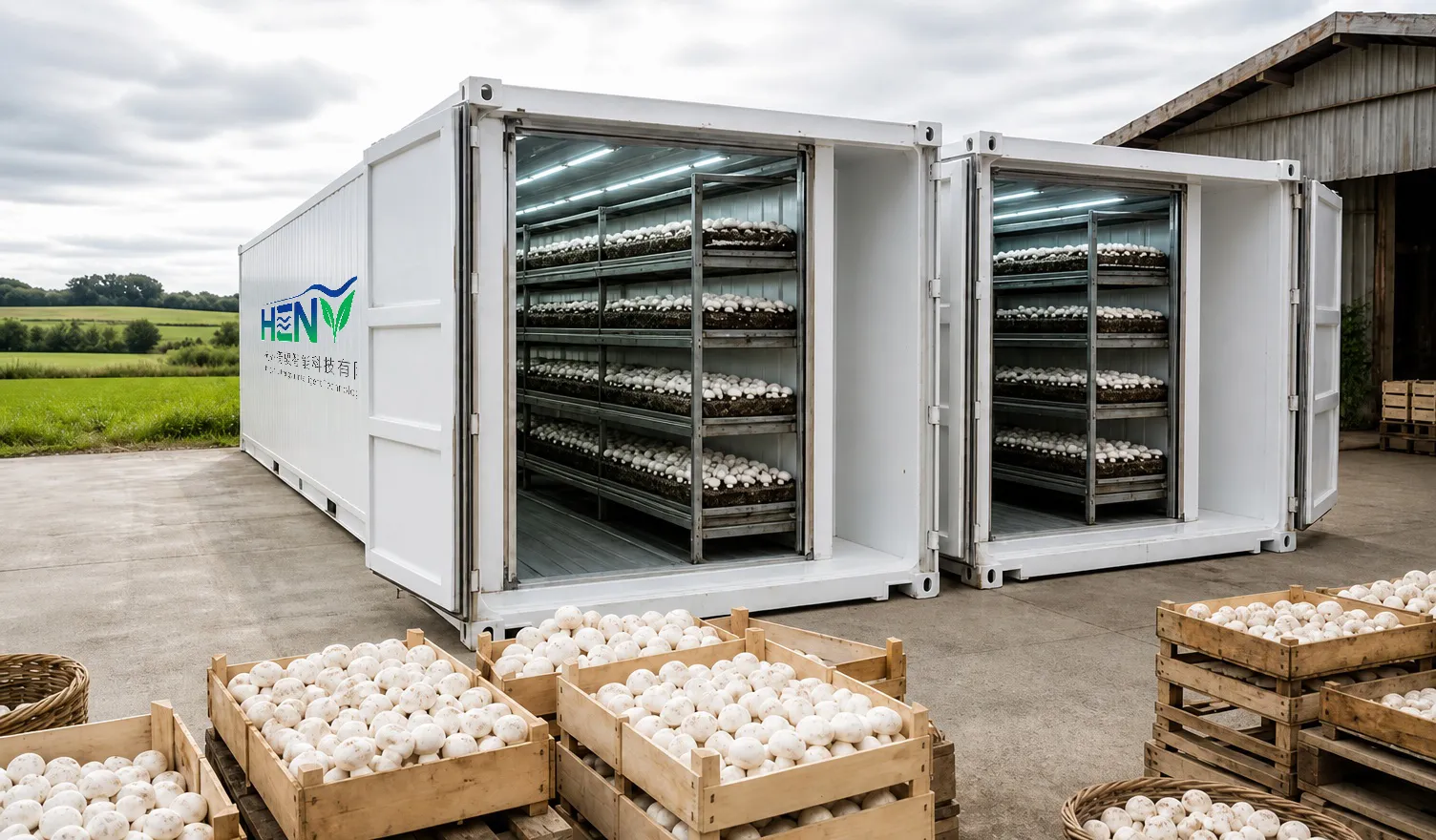
Container farming is technically impressive and commercially unforgiving. The gap between what the technology can do and what it can profitably do is the central question of the sector, and it deserves an honest accounting.
Start with capital. A single production unit—container, insulation, lighting, HVAC, irrigation, control system, and racking—represents a substantial upfront outlay. Costs vary widely by automation level and crop, but the pattern is consistent: the enclosure and controls are a fixed floor, and automation adds significantly on top. Multi-unit deployments achieve some economy of scale in engineering and control, but each container remains a largely independent physical plant.
Operating costs dominate the long-run picture, and they are led by energy. Lighting runs 14–18 hours a day. Cooling and dehumidification run continuously. Together they can consume the majority of operating expense, which means electricity price is not a detail—it is the binding constraint on viability. A project in a low-tariff region with a temperate climate faces a fundamentally different business case than one in a high-tariff region with temperature extremes. This is why siting decisions for container farms should be driven by power and climate as much as by proximity to consumers.
Labor is the second major cost and the one most sensitive to automation. Manual seeding, transplanting, harvesting, and cleaning consume substantial hours. Automation reduces this but adds capital, maintenance, and technical staffing requirements that small operations often cannot support. The trade-off is rarely clean; it depends on local wage levels and the value of the crop.
Revenue depends on crop selection and market access. Leafy greens, herbs, and microgreens are the economic workhorses because they are high-value by weight, fast-cycling, and tolerant of the environmental conditions a container provides. Premium positioning—local, pesticide-free, ultra-fresh, specialty varieties—supports higher prices than commodity markets can offer. Attempting to compete on commodity pricing against field-grown produce is a losing proposition, because the energy cost per calorie is simply too high.
The sectors where the math works most convincingly are those with structural advantages: high-value crops with short cycles, markets willing to pay a premium for freshness or provenance, locations where land or climate makes field production impossible, and settings—research, defense, disaster response—where cost is secondary to availability. In those niches, container farming is not merely viable but uniquely capable.
The honest conclusion is that container farming is not a general-purpose answer to food production economics. It is a precision tool for specific conditions. Its projects succeed when energy is cheap or controllable, crops are valuable, and demand is nearby or captive. Where those conditions fail, no amount of technical sophistication will rescue the business case—and recognizing that early is itself a form of engineering discipline.