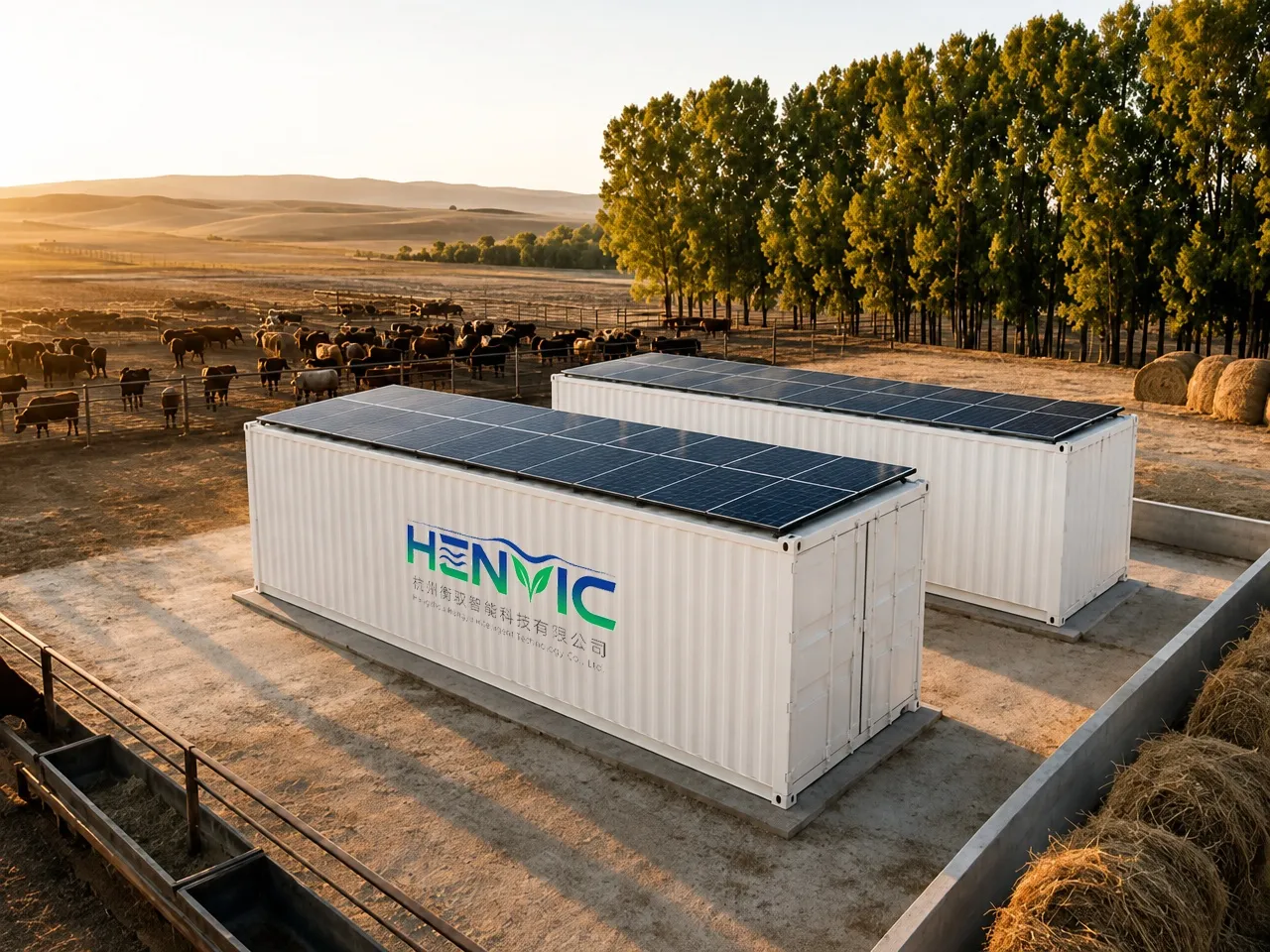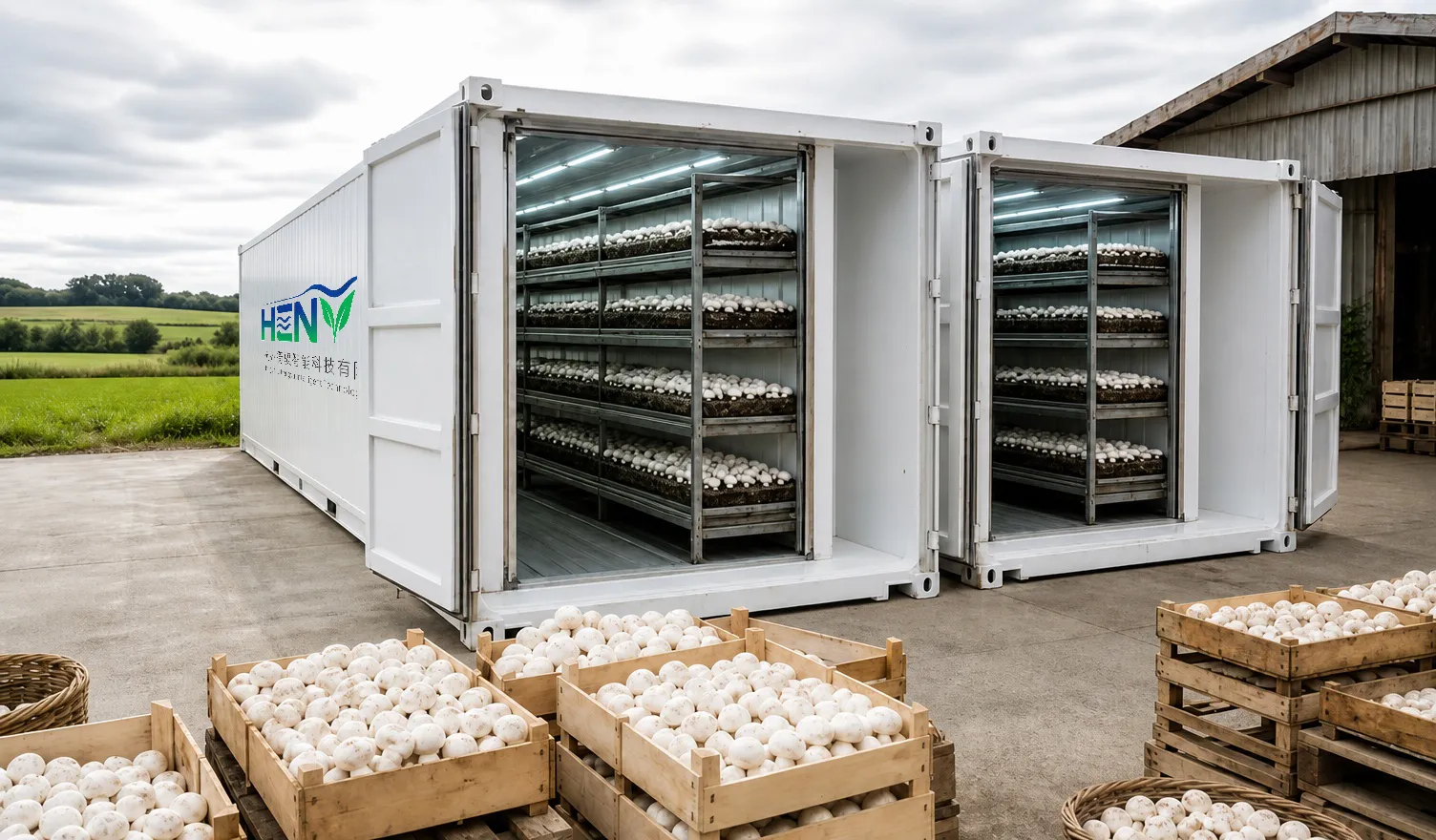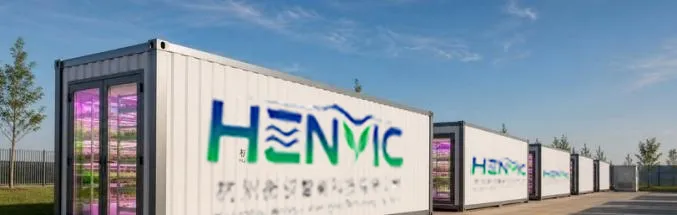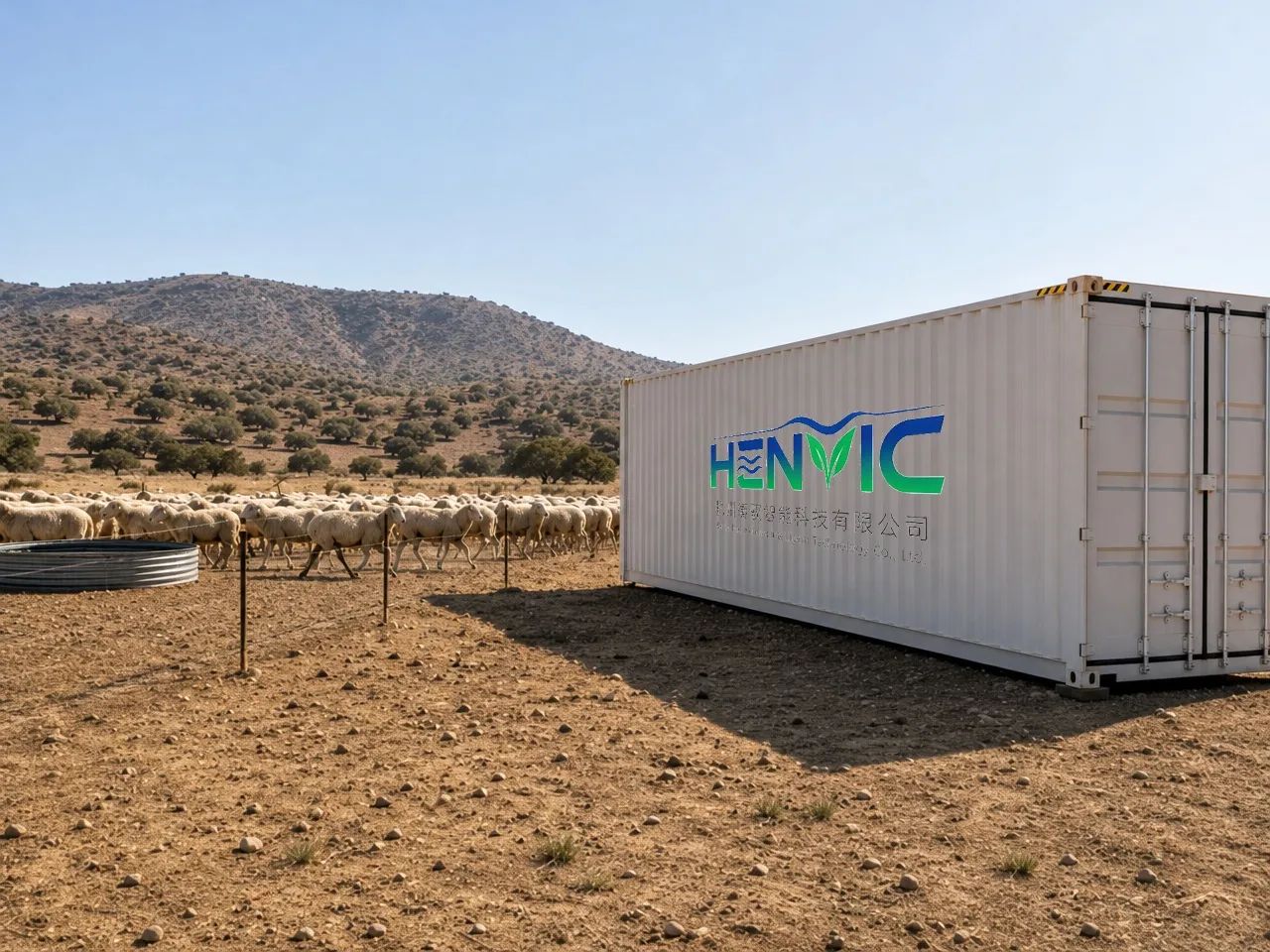
Container farm and plant factory are frequently used as if they were the same category, and the confusion is forgivable: both grow crops indoors, under artificial light, without soil, on stacked layers. But they are different products with different cost structures, and the difference is not cosmetic. A container farm is a standardised steel box designed to be transported, stacked and relocated. A plant factory is a purpose-built or purpose-adapted building, designed around production rather than around shipping. One is manufactured as a unit; the other is constructed as a project. That distinction—product versus project—cascades through every line of the cost account, from capital outlay to energy intensity to the scale at which each route becomes defensible.
What Actually Separates the Two Routes
The container farm's defining property is that it inherits an existing industrial shell. The forty-foot high cube has fixed internal dimensions, known floor loading, and lifting and stacking interfaces that global logistics has spent fifty years standardising. This means the growing unit can be assembled in a factory, commissioned before it ships, lifted onto a truck or vessel, and connected to power and water at the destination. Deployment is closer to installing equipment than to building a facility.
The plant factory makes the opposite trade. Its building is designed or adapted to fit the growing operation, which means ceiling height, floor loading, racking layout, air-handling routing and electrical capacity can all be specified for production instead of being constrained by transport limits. The cost of that freedom is that every project is bespoke: design, permitting, construction and commissioning are site-specific, and none of the engineering effort is amortised across identical copies.
Cost comparisons between the two routes therefore tend to go wrong in a predictable way. A per-unit capital figure taken from a container vendor and a per-square-metre construction figure taken from a plant factory project are measured on different bases, at different scopes, and with different inclusions. The comparison is only meaningful once both are expressed per square metre of usable growing area and per kilogram of annual output, with the same boundary drawn around what counts as the system.
Capital Cost: Standardisation Against Customisation
On a per-unit basis, a fitted container typically sells in the range of roughly eighty thousand to one hundred and fifty thousand US dollars, depending on automation level—shell, multi-tier racks, LED lighting, climate control, fertigation, sensors, controls and commissioning included. A standard unit offers roughly twenty-eight to thirty square metres of internal floor and, after stacking four to six tiers and deducting aisles and service space, somewhere between one hundred and one hundred and forty square metres of usable growing surface. The implied capital cost per square metre of growing area therefore lands in the range of roughly six hundred to twelve hundred dollars.
A plant factory is harder to reduce to a single number, because the scope varies enormously. A conversion of an existing warehouse—the cheapest realistic route—captures the building envelope, power supply and floor slab at little or no incremental cost, and the capital then concentrates in racking, lighting, HVAC and irrigation. New construction is a different order of magnitude entirely, and greenfield builds frequently carry land, structural, mechanical and electrical costs that push total investment well above what a container-equivalent area would require.
The more important structural difference is not the headline number but its composition. Container capital is largely a product cost: it is quoted, financed, depreciated and insured as equipment, and it can be moved, resold or redeployed. Plant factory capital is largely a fixture cost: it is sunk into a specific address, and its residual value outside that use is limited. That matters most in the scenarios where the operation fails, because the container retains a secondhand market and the building generally does not.
There is also a hidden capital line that container farms carry and plant factories often do not: the value of the space they occupy. A container placed on cheap land at the urban fringe is genuinely low-cost in this respect. Stacked containers on a valuable urban lot are not, because the land cost is real whether it is paid or forgone as an opportunity. A plant factory on the same lot spreads that land cost across far more growing area, which is where the purpose-built route starts to recover ground.
Energy: The Dominant Operating Cost
In both routes, electricity is the largest recurring cost, and both are structurally dependent on it because neither receives free sunlight, free cooling or free airflow. The difference is in how the load is distributed and how efficiently it can be managed.
The major loads are the same in each case: lighting, cooling, dehumidification, ventilation, circulation pumps and controls. Lighting usually dominates a leafy-green operation, because photosynthesis requires a photosynthetic photon flux density measured in hundreds of micromoles per square metre per second, sustained for twelve to eighteen hours daily. Climate control is the second major load and, in most climates, the one that runs continuously.
Here the plant factory has a genuine structural advantage, and it is worth stating plainly. A purpose-built facility can be designed with a higher ceiling, a thicker and better-insulated envelope, and an air-handling layout optimised for the actual rack geometry. It can separate thermal zones so that a germinating area, a vegetative area and a finishing area each hold their own set point without the whole building chasing an average. It can place chillers, heat recovery and outdoor air intakes where they make engineering sense rather than where a shipping envelope allows. It can decouple humidity control from temperature control rather than relying on a packaged system to do both.
A container, by contrast, inherits a steel shell with a high surface-to-volume ratio, limited insulation in most conversions, and a fixed footprint that constrains ducting and stratification. Its climate system must handle the whole load within a transport envelope, which usually means less redundancy and less efficiency headroom. This is not a fatal defect—containers function perfectly well—but it does mean the energy cost per kilogram of output tends to be structurally higher in a container than in a comparable plant factory, and the gap is largest in climates with significant outside temperature swings.
Measured against output, the operative figure is kilowatt-hours per kilogram of produce. In efficient artificial-light leafy operations this commonly falls in the low to mid single digits per kilogram, with less efficient or higher-light setups running considerably higher. At commercial electricity prices, this energy cost can approach or exceed the wholesale value of the crop, which is the single most important reason neither route can be sold into commodity channels and both must reach buyers who pay a proximity, freshness or consistency premium.
Labour and Automation
Both routes face the same automation ceiling: seeding, transplanting, harvesting, trimming, packing and cleaning all involve irregular, deformable, living objects that robots handle poorly and expensively at commercial quality. In both cases, labour concentrates in the least automatable tasks, and it scales nearly proportionally with output rather than down with volume.
The difference lies in the labour profile and the skill mix. A plant factory large enough to justify it can install conveyor systems, automated seeding lines, centralised fertigation, and bulk handling for substrate and packaging—investments that need volume to pay off and therefore suit the purpose-built route. It can also employ a maintenance and engineering team large enough to justify specialised roles, and it can run longer shifts with thinner supervision per unit of output.
A container operation typically runs with one or two people per box, and the economics of that staffing pattern shift as the network grows. A single box needs an operator who can monitor sensors, act on alarms, calibrate dosing pumps and hold a maintenance schedule—closer to a process technician than a grower. That role is scarce and increasingly well paid, and one technician covering three boxes costs far less per box than one technician covering one. In other words, container labour economics improve with density of units, not with the size of any single unit, which is a very different scaling logic from a plant factory's.
The Utilisation Question
The variable that most often determines whether either route works is neither capital cost nor the price of power. It is utilisation.
Both routes carry a large fixed cost base—depreciation, climate systems that run whether or not the box or the room is full, and a minimum staffing level—against a variable revenue stream that depends on how much of the capacity is actually producing. A container at fifty per cent utilisation does not halve its energy bill; it may trim it only modestly. A plant factory operating one shift instead of two carries much the same overhead across half the output.
This is where the two routes diverge in how gracefully they handle underuse. A container can be decommissioned, moved or sold if demand fails to materialise, which caps the downside at the cost of the unit. A plant factory cannot: the building remains, the lease or mortgage remains, and the capital is stranded in an address. The container's modularity is therefore not just a deployment convenience. It is a risk-management feature, and in a sector where the majority of failures are commercial rather than technical, that feature is worth more than it appears on a specification sheet.
The corollary runs the other way too. A plant factory becomes cheaper per kilogram as it approaches full capacity, because it is diluting a larger fixed base across more output. A container network becomes cheaper per kilogram as the number of units per site increases, because the fixed cost of supervision, utilities connection and maintenance is spread across more boxes. The optimal shape of each model is different: one large integrated facility for the plant factory, a cluster of standardised units for the container route.
Where Each Route Actually Wins
Set against each other honestly, the two routes occupy different niches rather than competing head-on.
The container route wins where deployment speed, portability and reversibility matter more than unit economics at scale. That includes pilot and demonstration projects, where a single validated box is the cheapest way to learn the operating discipline; distributed urban sites, where a small footprint on marginal land beats a large footprint on expensive land; remote and island locations, where the alternative is airfreight or nothing; and settings where the growing unit may need to move—disaster response, temporary deployments, or a site whose lease is shorter than the equipment's life. It also wins where capital must be staged: a container can be bought, operated, and paid for out of cash flow before the next one is committed.
The plant factory route wins where volume, consistency and cost per kilogram dominate. A purpose-built facility achieves better energy efficiency per unit of output, supports automation that a container cannot accommodate, concentrates labour and maintenance into a smaller number of more skilled people, and spreads site infrastructure—power connection, water treatment, cold storage, packing, loading dock—across far more production. For a committed market, a stable product line, and sufficient capital to build properly, it is almost always the lower-cost route per kilogram over the life of the asset.
The failure mode to avoid is treating one route as a universal answer. A container operated as though it were a small plant factory will be judged on kilogram cost and will lose. A plant factory deployed where flexibility was the actual requirement will be judged on adaptability and will also lose. The routes are not substitutes with a price difference; they are different instruments suited to different problems.
Reading the Comparison Correctly
The most useful way to frame the choice is to ask what the operation is actually buying. If it is buying a repeatable, relocatable, financeable growing unit that can be tested and scaled in discrete increments, the container's higher energy cost per kilogram is the price of optionality, and it may be well spent. If it is buying the lowest defensible cost per kilogram at a known volume in a known market, the plant factory's larger capital commitment and immovable asset base are the price of efficiency, and that trade usually favours the purpose-built route.
Both accounts are real. What is misleading is any comparison that isolates a single number—dollars per square metre, or kilowatt-hours per kilogram, or labour hours per box—and treats it as the answer. The cost structures of these two routes differ in what they include, what they can be reduced to with scale, and what they leave behind if the business does not work. Comparing them properly means comparing the whole of each structure, and then deciding which set of trade-offs matches the market being served.